Mother's Day
New book release

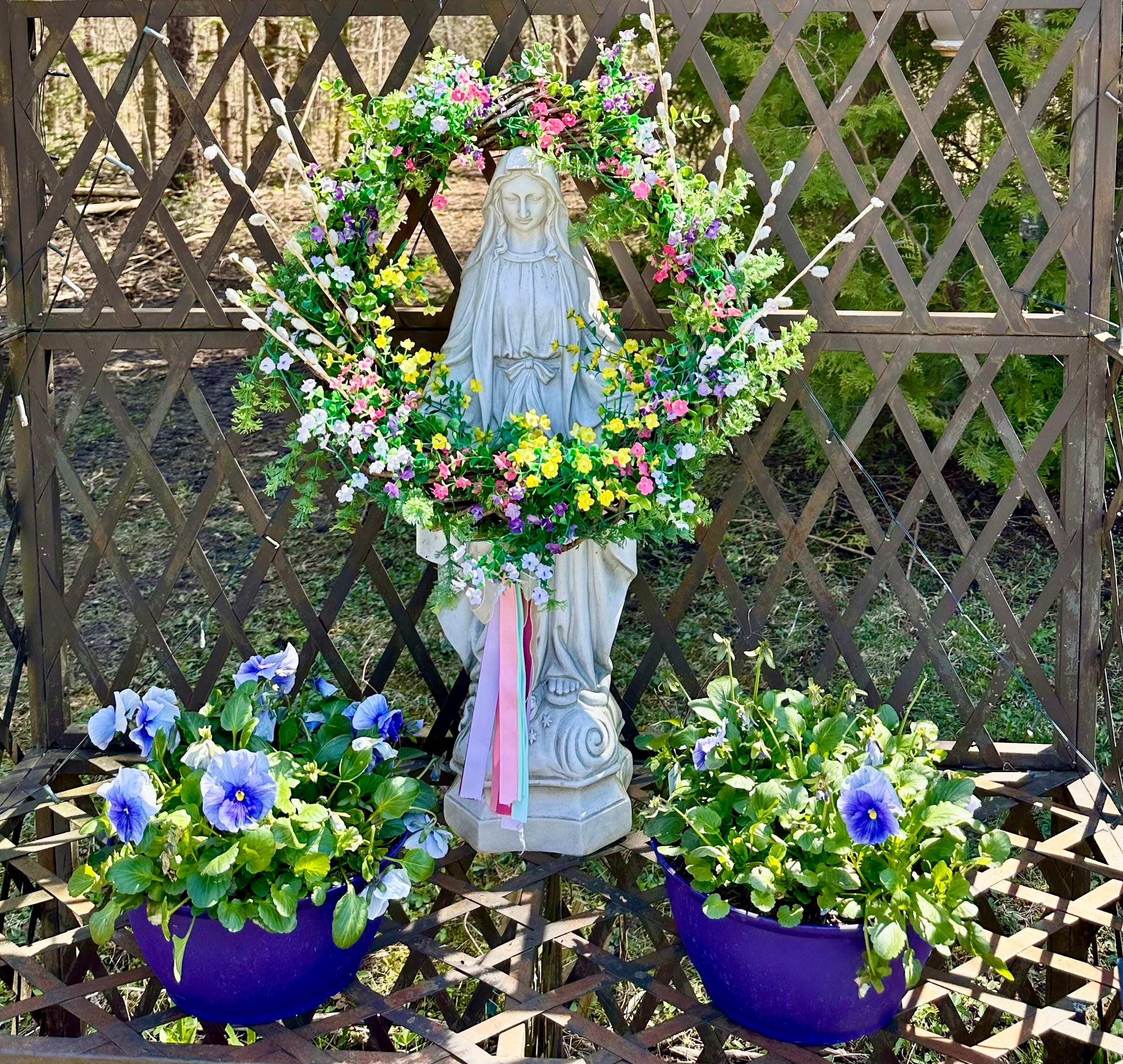
This week on Hut of Stories, I want to mark both Mother’s Day and the release of my new book, Mater Misericordiae: A Jungian Crone in the Church—a book born from forest paths, consulting rooms, Marian altars, fairy tales, friendships, griefs, laughter, liturgy, and the long apprenticeship of becoming an elder woman with a soul still willing to kneel before mystery.
At the heart of the book lies a simple truth: no woman becomes crone alone. We are mothered into wisdom.
Some mothers bear us in body. Others midwife us in spirit. Some hold us through infancy; others arrive decades later and place a symbolic loaf of bread into our starving hands. Some teach through scholarship and courage. Others through soup-making, prayers whispered in kitchens, endurance through sorrow, or the simple refusal to abandon love when life becomes difficult.
As I reflect upon Mother’s Day, I find myself thinking not only of biological mothers, but of all those women who carry life forward in unseen ways. The grandmother who keeps the family stitched together through quiet faithfulness. The analyst who sits patiently with another person’s suffering. The teacher who recognizes a hidden gift before the student recognizes it herself. The aunt who places a transformative book into the hands of a searching young woman. The elder who tends the ceremonial fire through the night. The friend who tells the truth without cruelty. The parishioner who continues to sing even after disappointment with the Church. The women who gather around tables and in forests and beneath stars and speak honestly enough that something in everyone begins to heal.
Motherhood is larger than biology. It is an orientation toward life itself.
And increasingly, I believe the world is starving for precisely this form of mothering—not sentimental indulgence, but fierce and enduring mercy. The kind that tells the truth and remains. The kind that does not flee the wound. The kind that can stand beneath the Cross and still consent to love.
In many ways, Mater Misericordiae emerged from this recognition. It is a book about the elder feminine within psyche and Church, about the difficult marriage between truth and mercy, about the journey from competence to consecration, and about the strange holiness of becoming permeable to love in the second half of life. It is also deeply personal. Beneath its reflections on Jungian psychology, fairy tale, ritual, and Catholic symbolism runs a quieter river: gratitude.
And so today, I want to share the acknowledgements exactly as they were written, because they carry the deepest truth of the book itself:
No woman becomes crone alone. If this book carries gravity, it is because I have been carried.
I bow first to my analytical mothers and grandmothers, whose thinking, courage, and devotion to psyche widened the path I now walk. To Emma Jung, who dared to articulate the feminine within a field shaped by men, and who stood beside genius without disappearing into it. To Barbara Hannah, whose fidelity to the living presence of the psyche modeled reverence without sentimentality. To Marie-Louise von Franz, who listened to fairy tales as if they were holy scripture and taught generations to trust symbol as teacher. To Marion Woodman, who named the body as sacred text and gave women permission to inhabit their flesh without apology. To Anna Ledbetter, Tess Castleman, Cedrus Monte, Liz White, Diane Longboat, and Cindy White, who carried feminine knowing into analytical, pastoral, and ceremonial spaces with intelligence and tenderness, weaving psyche and Spirit without severing either. Through your writings, your lectures, your risk-taking, and your perseverance, you formed a lineage of women who would not be silenced. I have drunk from your deep wells.
I offer gratitude to my biological and ancestral mothers and grandmothers and aunties and sisters, whose stories run through my veins and whose resilience steadied my spine. To Agnes and Margaret, my grandmothers, who endured more than was spoken and whose quiet faith and stories shaped the soil from which I grew. To Jacqueline, Betty, Dolores, Muriel, and Sharon who modeled and continue to model strength and love and resilience. To Rhonda, and Leeann, whose companionship across my life has reminded me that sisterhood is not luxury but necessity. You have laughed with me, challenged me, forgiven me, and loved me through seasons of ambition, exhaustion, doubt, and return. Your lives and mine are braided into these pages.
To my companions on the path toward Cronedom—how could I name this journey without you? To my Book Club women, who wrestle with text and life with equal fervor; to my Fairy Tale Seminar circles, who sit in the forest of story and allow it to transform us; to the Intensive participants at FoxHaven and elsewhere, who risk vulnerability beneath trees and stars and river and sea; to colleagues who sharpen and steady me; to analysands who entrust me with their most tender truths; to students who dare to ask deep questions; to parishioners who kneel and sing and carry the Church in quiet fidelity; and to readers who write to tell me that something I have written has touched something in you—your presence has made this work communal rather than solitary. You have become a gaggle of Baba Yagas and Marys, fierce and faithful, and I am honoured to walk beside you.
To beloved family, especially my grandchildren, Ashton, Ryan, and Rhea, you are the future for whom I gather the silver seeds.
And finally, to my beloved Sage husband, whose steadiness has been both anchor and horizon. You have listened to drafts and dreams, endured my spirals and summons, and held space for the woman I was becoming long before I recognized her. Your wisdom tempers my fire; your humour lightens my gravity; your love has been covenant rather than contract. In the long obedience of marriage, you have modelled what sacred partnership looks like in the second half of life. I am grateful beyond words.
To all who have shaped me, challenged me, mothered me, sistered me, taught me, and loved me into this voice—this book is not mine alone. It rises from a lineage of women and men who believed that mercy and truth belong together, and that aging is not diminishment but consecration. May what has been given to me be given onward.
As this book is birthed into the world for Mother’s Day, I do so with deep awareness that it belongs not only to me, but to a lineage. A communion. A forest of women and men whose roots have intertwined beneath the visible surface of things for generations.
And perhaps this is the real work of Elderhood: not self-importance, but transmission.
To gather silver seeds.
To tend the fire long enough that someone else may find warmth there.
To become, at last, less concerned with being impressive and more willing to become permeable—to mercy, to truth, to love, to God.
The river still flows.
And this Mother’s Day, I bow with gratitude to every woman who has helped carry it forward.
Hail Mary, full of Grace…
Huge congratulations on releasing “Mater Misericordiae: A Jungian Crone in the Church” into the world, dear Muriel. What a luminous offering, it will mother many! Another to add to my birthday book list. 💖🙏📖
Reading this the tears came without explanation, without permission from my ego. They flowed from my soul as I read, as my own list of gratitude resonated. We are all blessed by another book you offer us, from your soul to ours. Thank you Muriel for sharing your gifts with us.