Easter Before Dawn
The Forest That Teaches How to Die

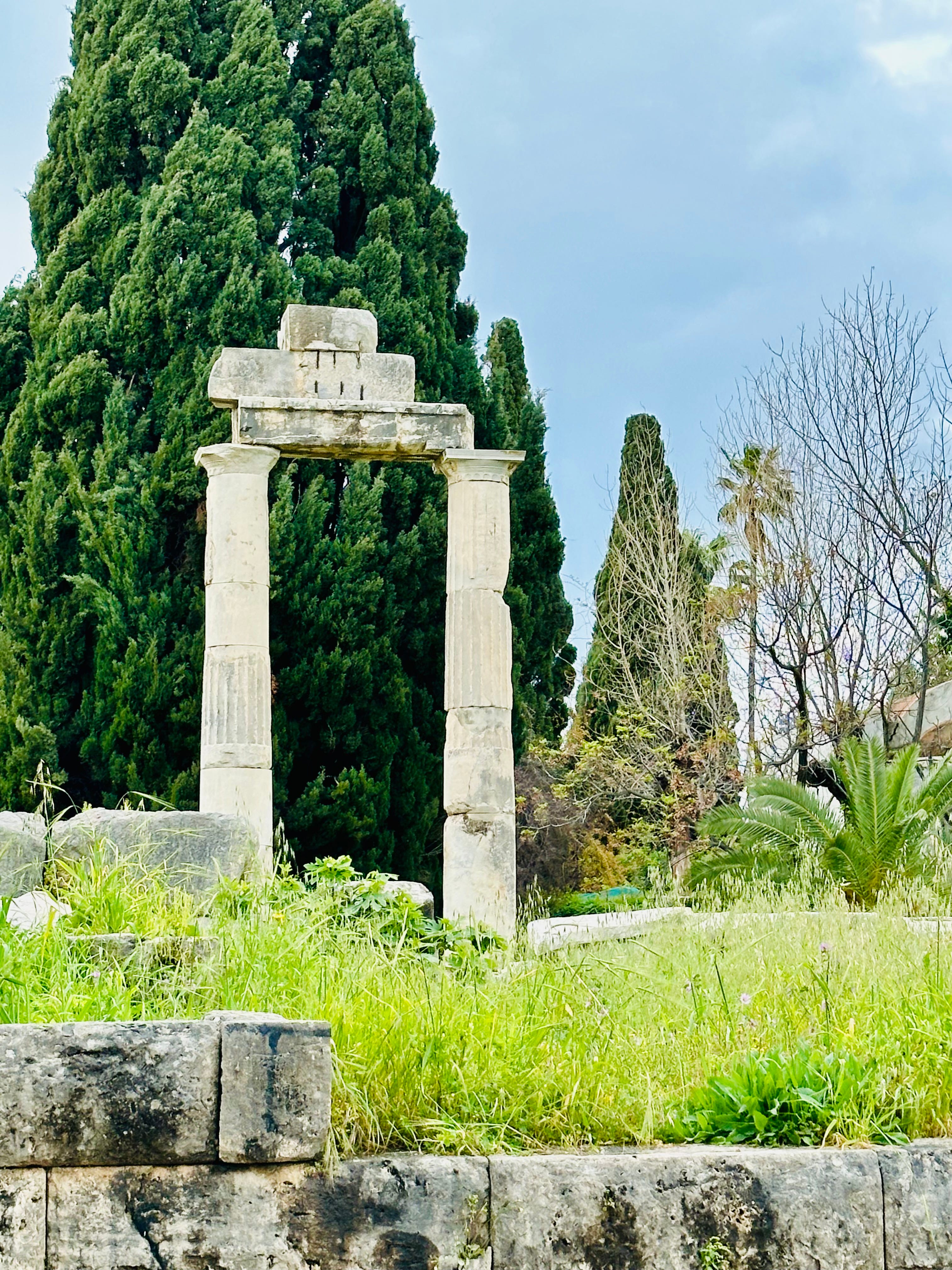
I woke before dawn on Easter Sunday on the island of Kos, my pillow wet with tears. Not tears of sorrow, but of a quiet, steady gratitude. The kind that arrives without announcement, when something in the soul has been confirmed by encounter. The dream did not feel like a dream. It felt like a visitation, or perhaps more truthfully, an initiation. A dream that unfolded with a clarity and coherence that lingered long after waking, as though it had been placed carefully into my keeping.
I found myself in a classroom at the end of a school year, a setting both familiar and long behind me. A Somali boy who had once been so difficult to reach stood before me now, radiant with pride, holding out his progress journal. He had learned to read. To write. To claim language as his own. I could feel the weight of that moment as something incarnate, something that had crossed from silence into form. I knew, in that way we sometimes know without explanation, that this was the work I had already been given: to midwife the word into being where it had not yet found a home.
Then Brian appeared, my long-dead vice principal and friend. He was standing within the ordinary light of the classroom as though he had never left it. I stumbled over his name, calling him by the wrong surname, and the students laughed gently, not unkindly, as if to suggest that names no longer hold the same weight where he now stands. When I remembered—Barras—it landed with a curious resonance, echoing something of barrier, of threshold, of that subtle line that both separates and joins. He had not come to reminisce. He had come to speak of dying, and not in abstraction, but in the most intimate and human sense: how to accompany those we love as they approach the great crossing. My sister hovered quietly in that field of conversation, her life extended by grace and yet still brushing the veil, and I felt the tenderness of that proximity without the urgency to resolve it.
As the dream deepened, the classroom dissolved, and I found myself in a forest. A living, breathing world that holds memory in its roots and intention in its branches. I knew I had been walking this terrain all winter, making my way with effort and determination toward a course at St. Catherine’s, a course in contemplation that I had pursued with discipline and resolve. But now it was spring, and the path had vanished. Or perhaps more truthfully, the path I had relied upon was no longer visible, and I stood in that quiet disorientation that comes when what once guided you no longer appears.
It was there that I met him, lying on a pallet near a bridge, a young man whose presence was at once ordinary and deeply marked by something other. I asked if he needed help, and he asked me the same, collapsing in a single gesture the distinction between the one who tends and the one who is tended. When I told him I had lost my way, he answered with a clarity that seemed to rise from the ground itself: “The way is being lost.” Not you. The way. He told me his name was Greg, and that he was dying, but he spoke without fear, without urgency, as one who is already in relationship with what is coming. The woods, he said, and the woodland helpers were assisting him, and as he spoke, I began to see what he meant. There were prayers tied to trees, messages gathered in stones, a subtle but unmistakable intelligence moving through the forest as though the entire landscape had agreed to accompaniment. Death, in that place, was participation in a larger ecology of care.
I moved on, encountering others who seemed to be part of an organized effort. Something like a program, a modern framing of what has always belonged to the soul. There was a sense of structure, of intentionality, as though the ancient knowledge of how to accompany the dying had been given language again for those who require it. I found myself speaking with them, telling them of Greg, of Brian, of the unexpected encounters that had shaped my passage through the forest. Then turning to my teacher when she suddenly appeared, almost protesting the gap between what I had studied and what I was now experiencing. I told her I had worked so hard to attend this course in contemplation, walking all winter with discipline, and yet none of this—none of this living truth—had been explicitly taught. She looked at me with a quiet steadiness and said simply, “It led you here.” And in that moment, the effort of the winter, the discipline, the study, all reoriented themselves as preparation for encounter.
Then came the moment that could not be avoided. I found myself at the edge of a cliff in the dark, moving forward without seeing, and nearly stepped into the void. There was the sudden, unmistakable recognition that one more step would have ended the life I knew. I caught myself, clinging to the edge, my body holding what my eyes could not perceive, and with great effort I pulled myself back to safety, back to life. I returned to the path, but I saw that the bridge I had intended to cross over the Grand River was no longer there. It had fallen away, leaving no possibility of crossing without getting wet. Whatever had been, whatever path had carried me to this place, was no longer available to me.
I found my companion again, and without deliberation, without weighing or choosing, the words arose as a simple recognition: this would now be my life’s work. To work in the forest. To accompany the dying. To help souls make the passage. This would not be a clinical task, not a role to be performed, but a participation in something both ancient and ongoing, something that does not belong to any one tradition and yet is present in them all. We prayed together then—for Greg, for Brian, for my sister, for all who are walking toward that crossing. In the prayer there was no sense of separation between the living and the dying, only a field of relationship that held us all.
I woke before Easter dawn, the light not yet risen, the stone not yet rolled away. Yet, in that soft light of resurrection, I came to understand something I had not fully understood before. The work of the analyst, at its deepest level, is not only to help one live, but to help one die well. Not by managing death or mastering it, but by recognizing that no one crosses alone, that there is a forest waiting, that there are helpers, and that the way we once relied upon may fall away so that a truer way can be revealed beneath our wounded feet.
Tomorrow we travel to Patmos, the island of revelation, where the veil is said to thin and what is hidden is made known, but something in me senses that the revelation has already begun. It began in the dark, before dawn, in a forest that knows how to accompany the dying—and now, perhaps, so do I.
Oh Muriel what a dream. What a calling. May your new path unfold to benefit us all. Indeed by reading this, it already has. At least for me.
Ah Muriel. May the stones be rolled away. To Patmos. To dreams. To John. To revelations. To soul. Safe travels 🙏❤️💫